
18 Aug 2026 · 7 min read
How scoring supports decisions throughout the innovation process

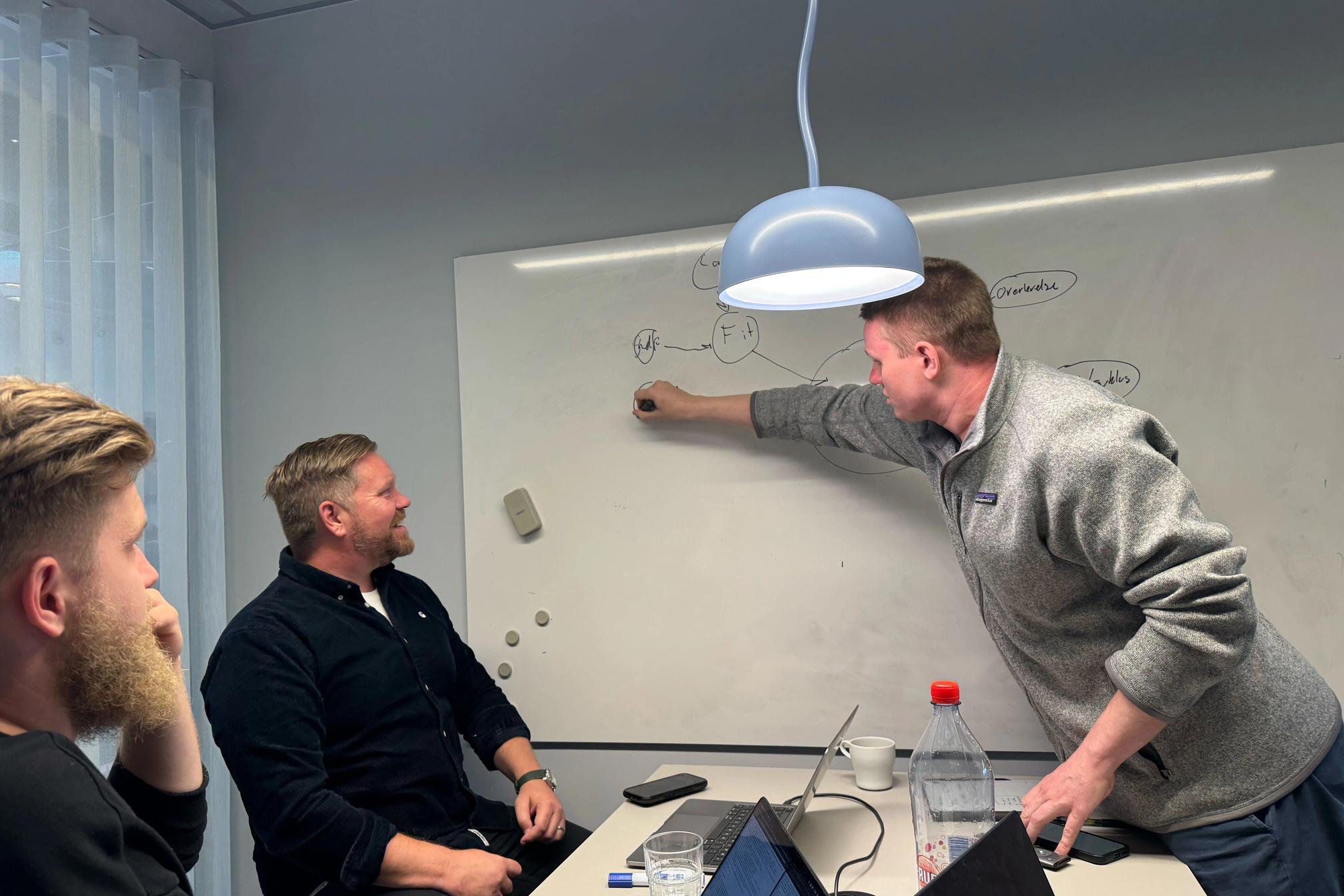
Choosing what to measure, comparing concepts and using scorecards from early assessment through launch review.
Scoring gives an innovation team a structured way to compare options, identify development priorities and assess readiness for the next investment. Its usefulness depends on choosing criteria that match the decision and explaining the evidence behind each assessment.
An early idea review might focus on consumer relevance and strategic fit. A later review needs more detail on production, costs, supply and launch preparation. After launch, observed performance can help the team evaluate its earlier assumptions.
This article proposes a practical approach to using scorecards across that process. It covers criteria, weighting, evidence quality, review decisions and learning from results.
Where scoring helps in the innovation process
Use scoring at points where the team needs to compare alternatives or agree the next commitment. Stage-Gate International describes consistent evaluation criteria and strategic alignment as important elements of project selection and portfolio management. [1] The structure below is our suggested application for a product innovation team.
At idea screening, a short assessment can help identify which opportunities deserve research. At concept selection, it can make the differences between product directions explicit. During development, it can highlight unresolved requirements. At launch review, it can bring together commercial and operational readiness. After launch, it provides a record against which to examine the results.
The purpose of each review should be written down before the scorecard is completed. Selecting an idea for investigation and approving a production commitment require different levels of evidence.
Choosing criteria for consumer appeal, feasibility and commercial fit
Start with the dimensions relevant to the business, the consumer need, product differentiation, portfolio role, technical feasibility, economics and route to market. Give each criterion a question the team can answer and a description of the evidence it expects.
For example, consumer relevance could ask whether the proposed product addresses a defined occasion for an identified group. Feasibility could ask whether the product can meet the required specification through an available production process. Commercial fit could examine the contribution expected under stated cost, price and distribution assumptions.
Keep evaluation criteria, scores and performance indicators distinct. A criterion names what matters. A score expresses an assessment against a defined scale. A performance indicator tracks something observable, such as time to complete a trial or sales per available store per week. Label projected measures as estimates until results are observed.
A simple scale can work when its meaning is clear. Define what low, medium and high mean for each criterion, and record the supporting evidence. Keep unknown inputs visible as unknown.
Adapting criteria and weights to the stage of development
The following is a suggested review structure, to adapt to your own process.
Early ideas, prioritise investigation
Assess the consumer problem, strategic relevance and potential portfolio role. Record the important assumptions and choose the next research task.
Concept comparison, select what to test
Add evidence on the proposition, alternatives, intended price and likely technical requirements. Compare concepts against the same criteria within that review.
Development, assess feasibility and economics
Use trial results, current supplier quotations, specification checks and cost assumptions. Identify which requirements remain unresolved before further investment.
Launch preparation, assess readiness
Review agreed specifications, supply arrangements, commercial plans and responsibilities. Define which conditions must be met before release.
Post-launch review, evaluate performance and learning
Compare results with the expectations recorded earlier, accounting for actual distribution, availability, promotional support and other launch conditions.
Weights express business priorities. Agree them before comparing the options and check whether reasonable changes would alter the ranking. Record the reason for a weighting change. A score calculated for early screening should be compared with other early-screening assessments using the same method; a later readiness score answers a different question.
Interpreting scores alongside evidence quality
Two concepts may receive similar fit assessments while resting on different evidence. One may have a tested price proposition and a current production quotation. The other may rely on assumptions in both areas.
A useful scorecard shows that difference alongside the assessment. Include the source, date, relevance and any material gap for each criterion. An unresolved cost estimate should lead to a defined follow-up task, with its effect on the comparison made clear.
Keep hard requirements separate from weighted preferences. If a product must maintain a specified shelf life, an attractive consumer score cannot compensate for a failed stability test. The team can investigate a different formulation, process or launch condition, then reassess feasibility.
When a model supplies an outcome prediction, state the event, time horizon and conditions. A fit score of 82 out of 100 carries a different meaning from an estimated probability. Research by Guo and colleagues explains calibration as the relationship between model confidence and observed correctness; their study concerns classification datasets, rather than FMCG launches. [2] A predictive claim for a product decision needs evaluation in its intended setting.
Using scorecards in concept reviews and stage-gate decisions
Prepare the scorecard before the review so participants can inspect the evidence and flag disagreements. At the meeting, focus on the criteria that affect the choice, particularly where the assessments differ or the evidence is weak.
Consider a hypothetical fruit-snack project with two concepts. The first offers greater differentiation but needs an untested packing process. The second fits the current line but has weaker evidence of consumer preference.
The review may allocate a production trial to the first concept and a targeted consumer test to the second. That decision follows from the pattern of strengths and uncertainties. Record the work approved, the owner, the resources committed and the condition for the next review.
Teams can use scorecards to support decisions to proceed, refine, test, defer or stop. A ranking is one input to that discussion. Strategic priorities, resource availability and mandatory requirements also need explicit consideration.
Updating assessments as research and assumptions change
Link each assessment to the evidence it uses. When a supplier quotation, consumer result or product specification changes, the team should be able to identify the affected criteria and concepts.
Record whether a score changed because of new evidence, a corrected input, revised priorities or a different evaluation method. Keep the assessment used at the previous review as a historical snapshot alongside the current version.
A practical change note might read, "The production assessment improved after the packing trial met the agreed requirements. The price assumption still needs testing before the next commercial review." This explains the progress and the remaining work without relying on a change in the overall number alone.
Comparing pre-launch assessments with market results
Before launch, specify which outcomes will be reviewed, over what period and using which data. Depending on the objective, these could include trial, repeat purchase, contribution, sales velocity or an operational measure.
At the review, compare the actual launch conditions with those assumed in the scorecard. Lower distribution or stock availability may affect how sales should be interpreted. Preserve the distinction between an observed result, an explanation for that result and a question that needs further investigation.
Use the findings to examine individual criteria and assumptions. Did the production assessment reflect the problems encountered? Was the price proposition supported? Which information proved useful, and which was missing? Changes to a predictive model or scoring method should be evaluated across an appropriate set of projects before being treated as an improvement.
At TasteForge, this approach informs the decision support we are developing by connecting criteria, evidence, company context and review actions through the innovation process. It also provides a practical starting point for a team using a shared document or spreadsheet today.
Choose one upcoming review. Define the decision, agree the criteria, identify the evidence for each assessment and record what the team will do next. That establishes a scorecard the team can use, review and improve.
Sources
[1] Stage-Gate International, Portfolio Optimization. Used for the role of evaluation criteria and strategic alignment in project selection. The article's stage-specific structure is a TasteForge editorial proposal. https://www.stage-gate.com/about/stage-gate-innovation-performance-framework/portfolio-optimization/
[2] Guo, Pleiss, Sun and Weinberger, On Calibration of Modern Neural Networks, ICML 2017. Used for the distinction between model confidence and calibration; the study does not evaluate TasteForge or FMCG launch predictions. https://proceedings.mlr.press/v70/guo17a.html